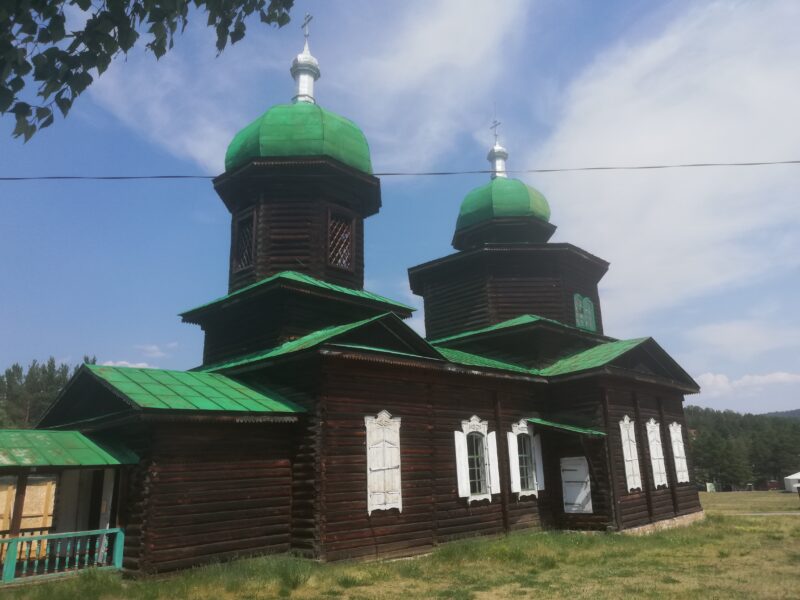
Today we went to see the open-air Ethnographical Museum located on a gently-sloping hillside among beautiful pine forests about 20 kms north of the city centre. We waited about 2 minutes for the No.37 bus which stopped right outside the hotel and the trip cost a total 80 pence. The day was roasting hot (I estimated about 35 degrees) and got even hotter as the day wore on, reaching 41. We paid a total £8 to get into the museum, and spent three happy hours touring the site anti-clockwise through the stones with petroglyphics, old burial sites, medieval wigwam-type huts that the local tribes lived in, and a special section for the Evenki tribe which covered much of Eastern Siberia and the Russian Far East. We then looked at more recent wooden houses from the 19th century and the reconstructed St Nicholas Church.
We finished the day by re-visiting “Dodo’s Pizzeria” which serves “buuzy” (“pelmeny” in Russian, “momos in Chinese and Nepali and dumplings in English). We went there the previous evening after eating in the hotel the night before and had an equally delicious meal at 9 times the cost.
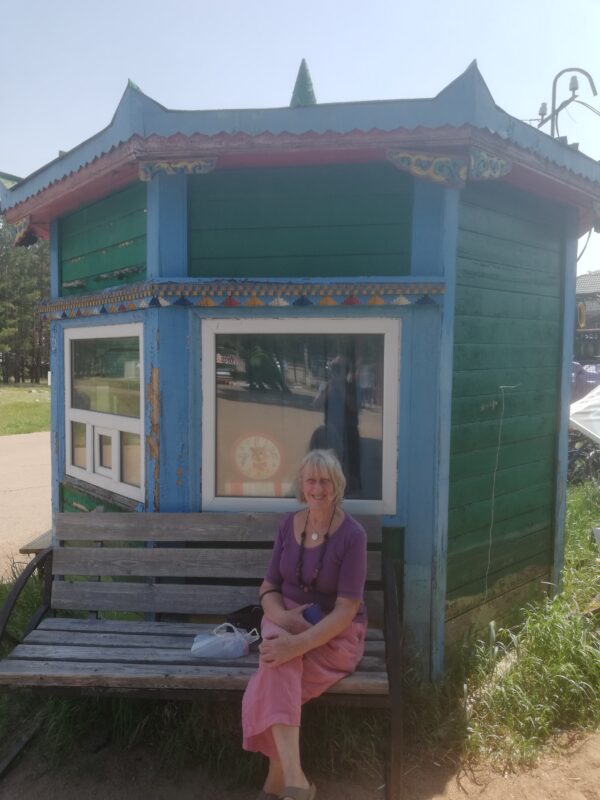
Jennifer at the museum

The “Deer Stone”, Bronze Age, about 1,100 BC from Aginsk village, Chita Province. Shows the sun symbol and elements of a warrior
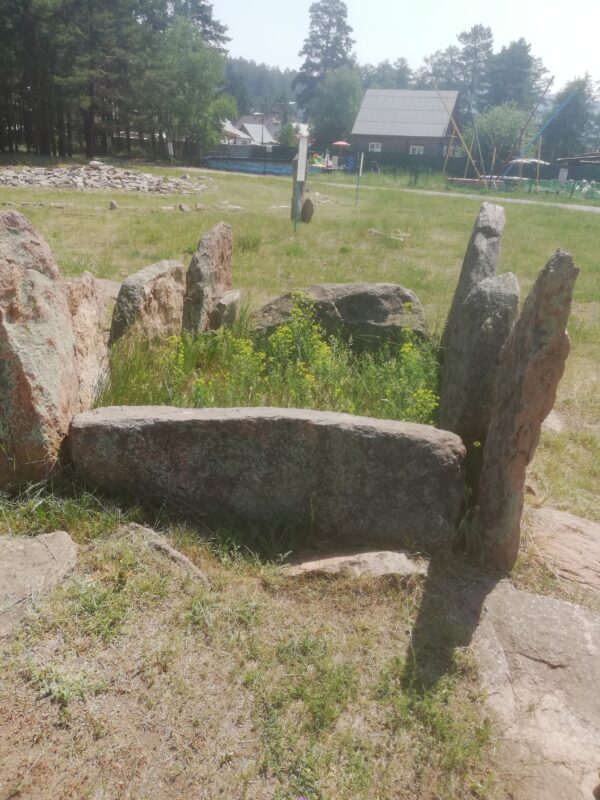
Burial tombs, 1st millennium BC from Khorinsk region, Buryatiya. Contained articles from bronze, ceramics and animal bones.
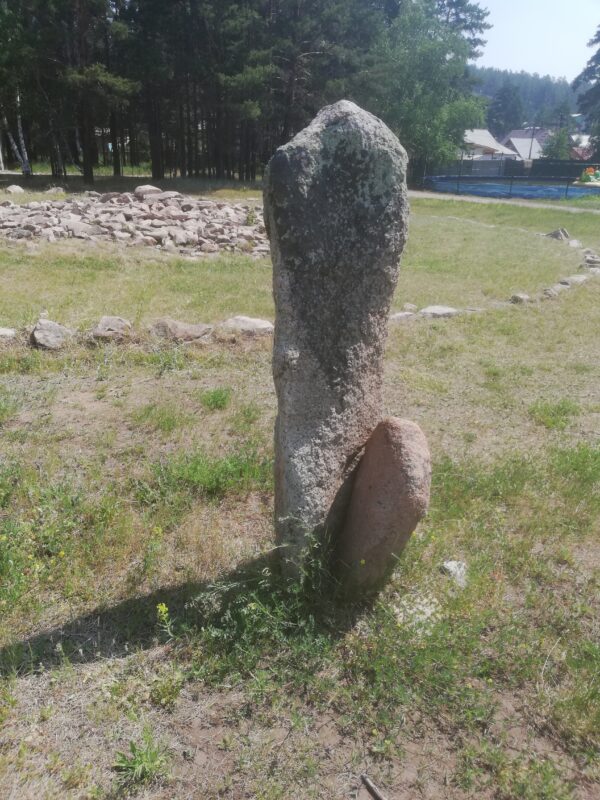
“Watching Stones”, Khorinsk region Buryatiya, 6th century BC. Anthropomorphic form, subsequently used as tethering posts.

Mass burial mound , 1,100 BC, Khyakta region of Buryatiya (on border with Mongolia). Includes 4 sacrificial places consisting of 4 small circles.
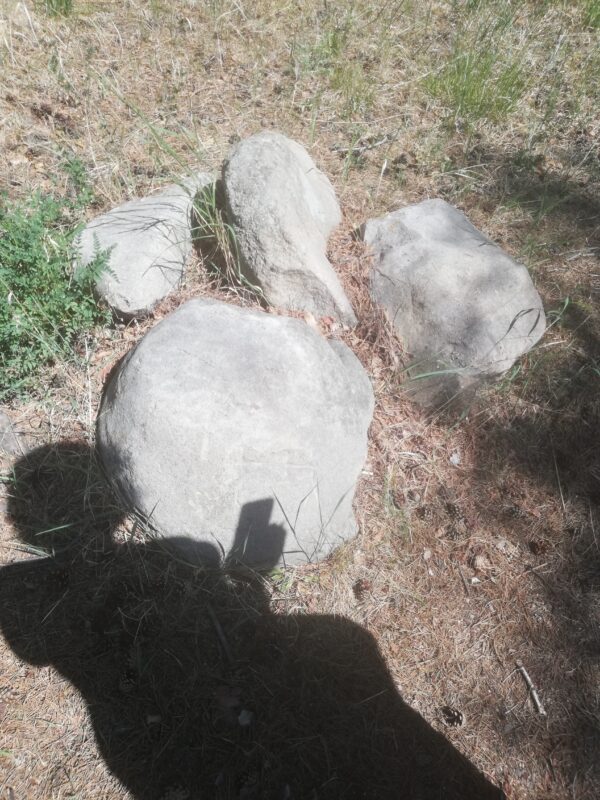
“Little Deer Stones”, 4th century BC, Bichura region. Shows a deer’s head, ear rings, belt, animals and different signs.

Petroglyphs from late Bronze Age, drawn with ochre colouring
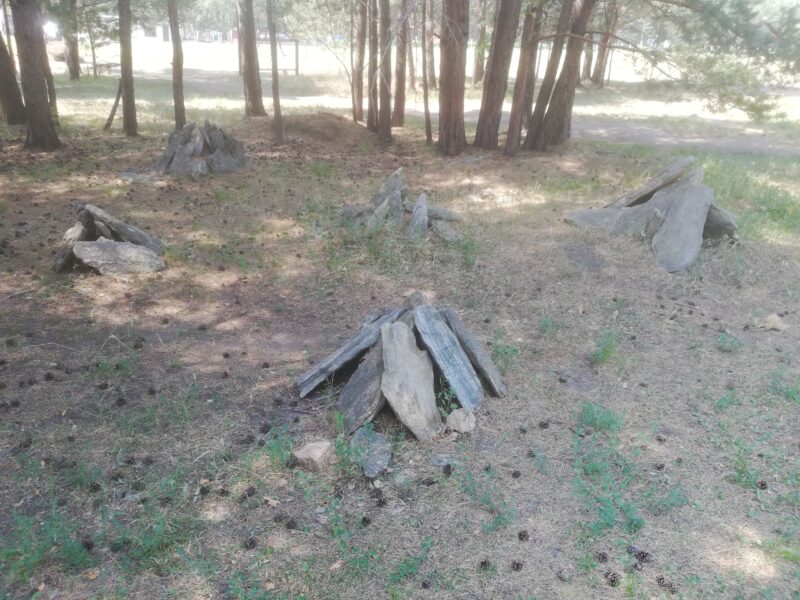
Found in Kurkut village, Olkhonsk region, Irkutsk Province, early middle ages. Used by the Kurumchinsk culture for storing bones, glass and crockery, and holding rituals
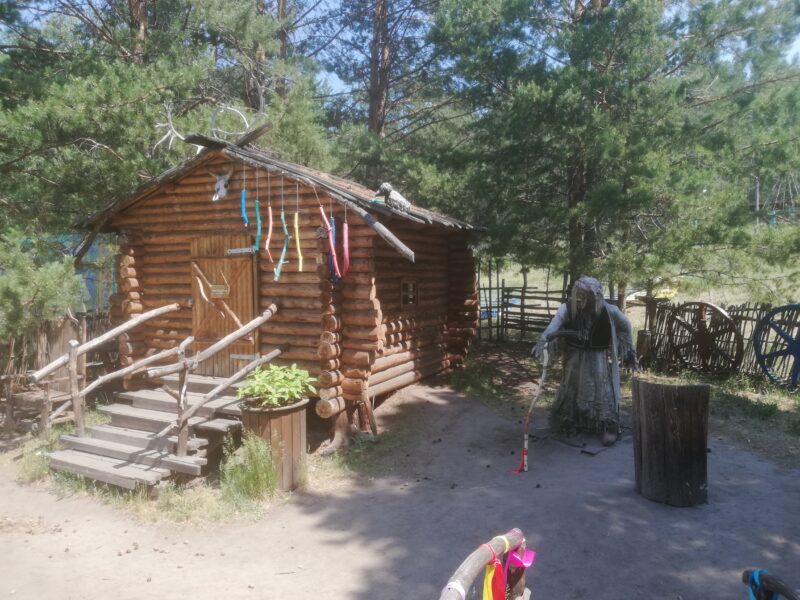
Buryat log cabin with Baba Yaga (Russian witch)
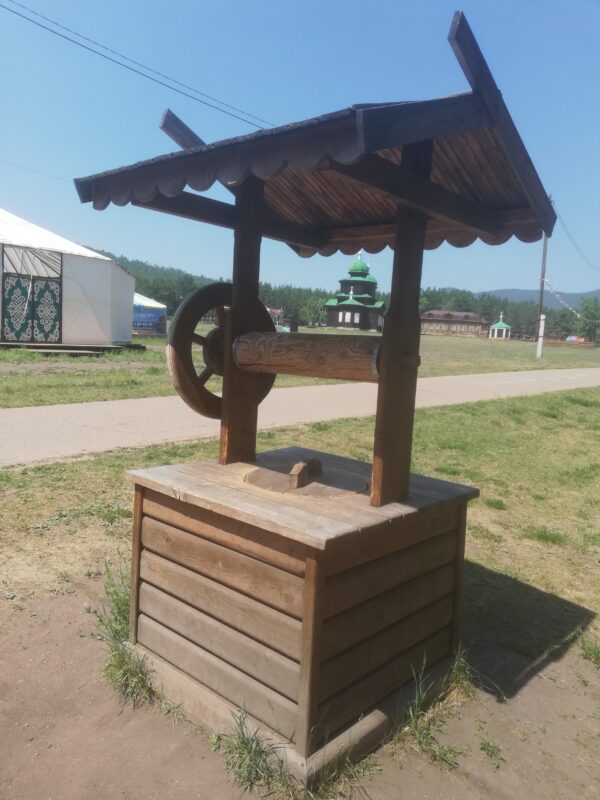
A well with Nicholas Church in background

Au “ursa”, traditional dwelling of the Soyot people. Made of larch trunks covered with bark, as well as deer, yak and elk pelts. Richer people used bear pelts.

A shaman’s tent with two galleries, darpe and onan. Darpe represents the upper world, the world of good spirits. Onan symbolises the lower world inhabited by evil spirits and the souls of dead people in the form of wolves. Mugdene is the middle world of living people depicted as birds

Boat made from a tree trunk
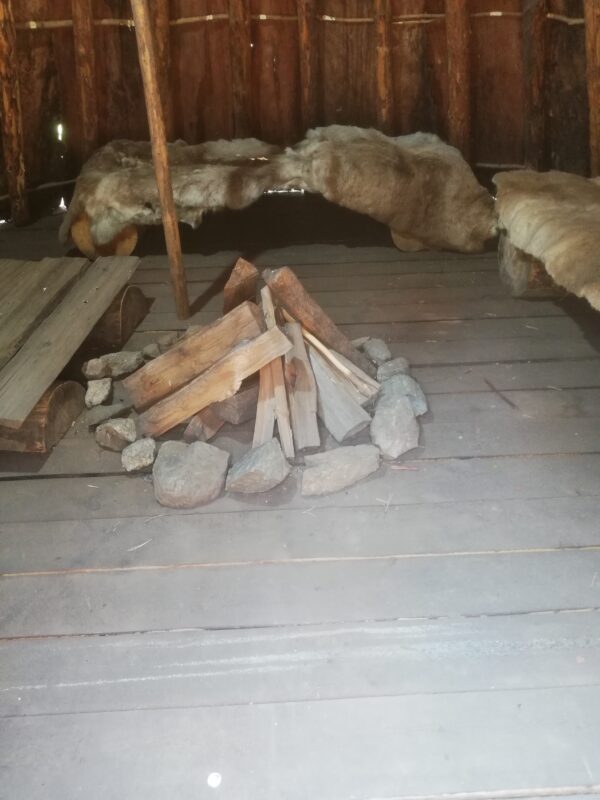
Inside of an Evenki tent. The seat behind the fire is reserves for guests.

Bark being dried for use as covering for tents

Boat made from animal skins
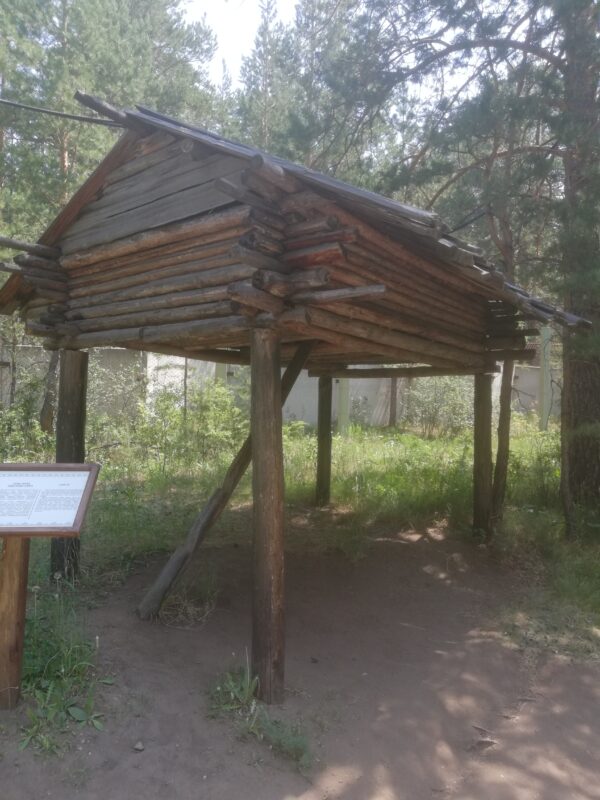
Building used for storage of food so that wild animals wouldn’t get it. When the family moved, they would leave food for another family.
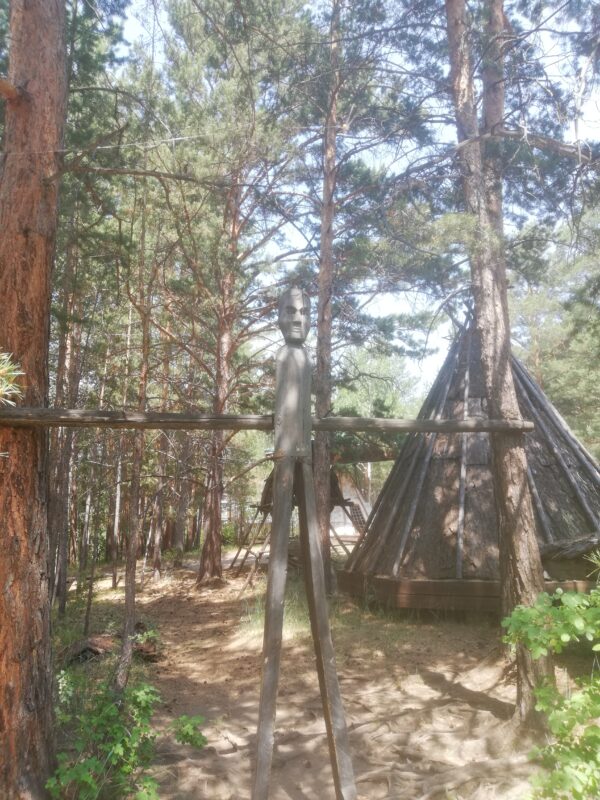
The “chichipkan”, translated from Evenki as “loop-hole” was erected by the shaman. Hunters would pass between the two legs of the statue to ensure good luck in hunting and protection from evil spirits. The roles of the shaman were healer, protector from evil spirits and predictor of a person’s fate. The shaman had the supernatural ability to communicate with the spirits and negotiate with them. When the shaman was in a state of deep ecstasy, he was said to be among the spirits.
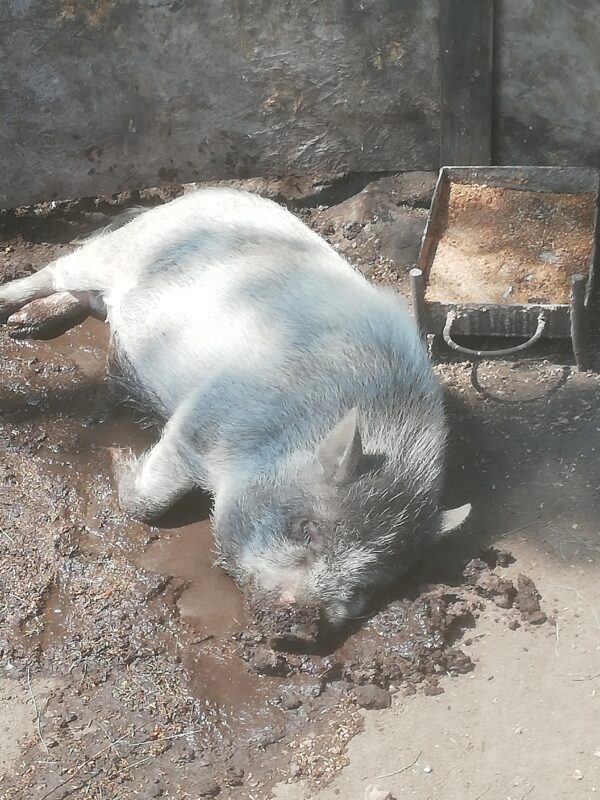
There was also a zoo with local animals. Wild pig.
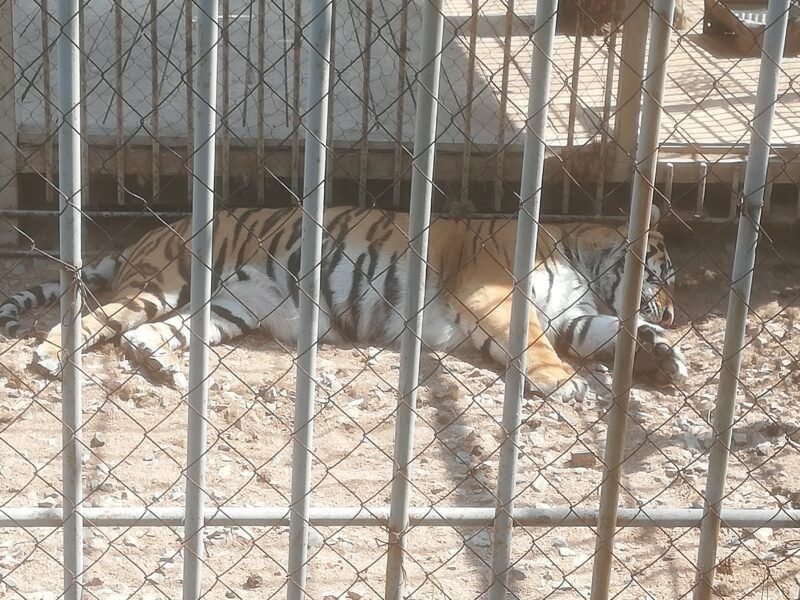
A tiger. There were also yaks which I couldn’t get a god picture of through two sets of wire.
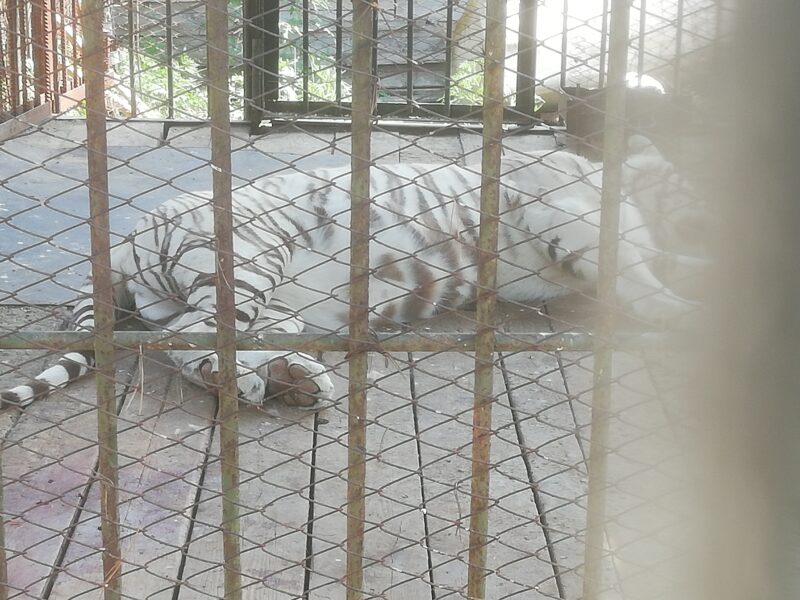
White tiger.
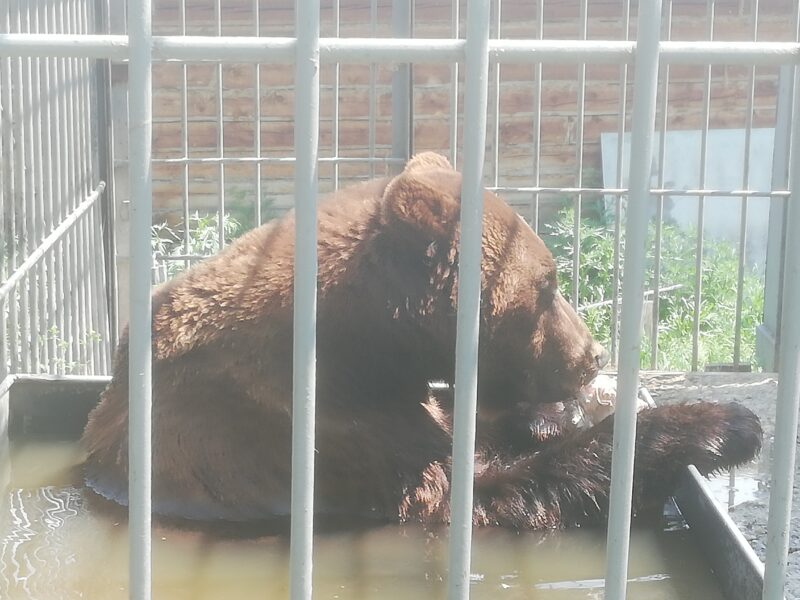
There were two bears in a very small cage. They spent the day walking up and down and bathing in a small tank.
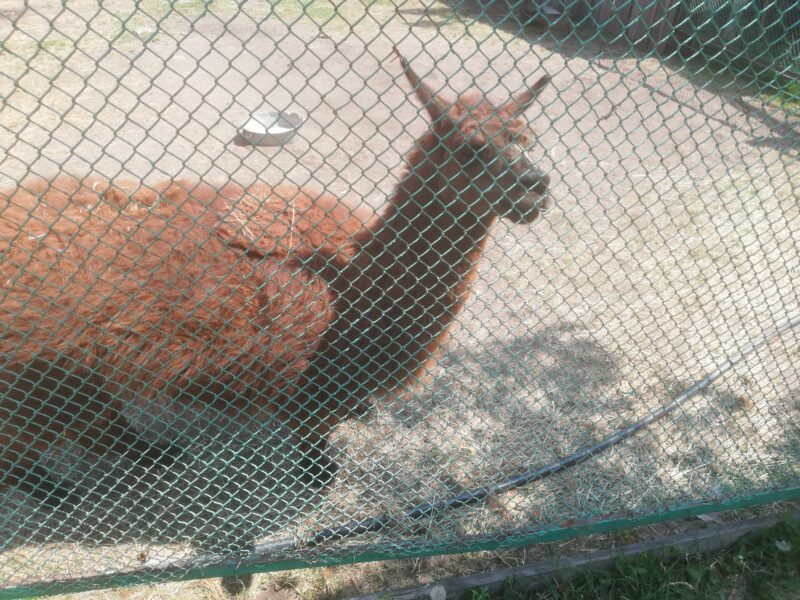
Alpaca

Buryat apartment building, late 19th century. For temporary or poor tenants

Saint Nikolai church, built in 1905

Inside the church. Temperature now 4 and Jennifer feeling the heat.

Wall paintings of icons
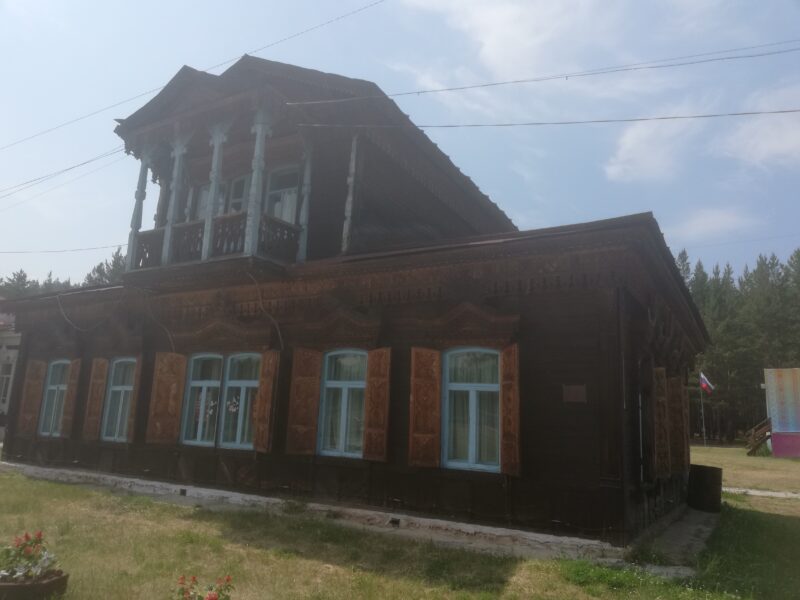
House of rich Buryat, late 19th century
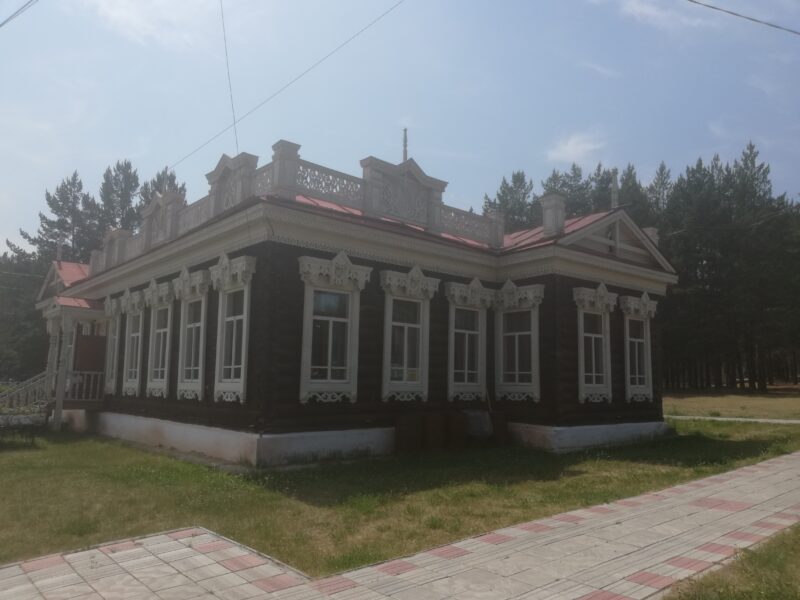
House of even richer Buryat
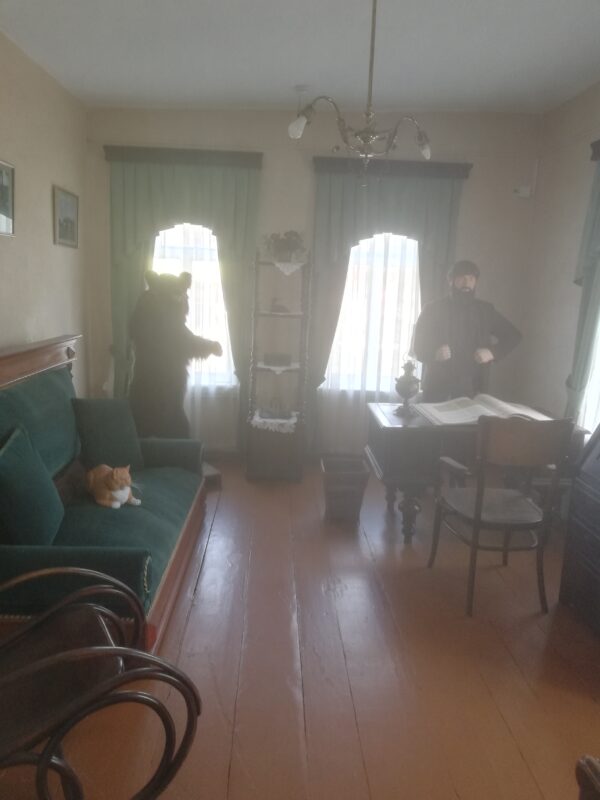
Living room with stuffed bear

Fireplace.