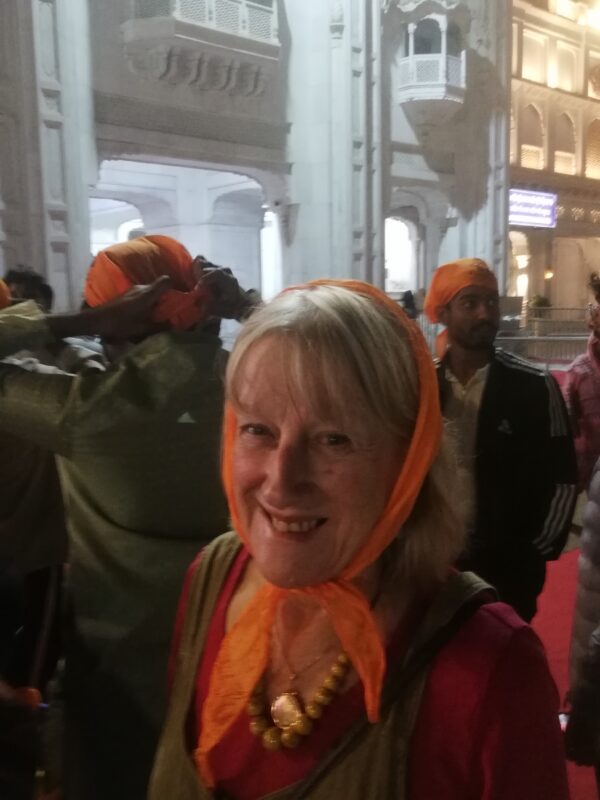
Waking up at 1.15 PM we relaxed until 4 pm then decided to see the Golden Temple at night. Google Maps says it is half a mile from the hotel so we decided to walk along narrow streets packed with pedestrians, tuk-tuks, scooters, cars, piles of rubbish and sleeping dogs, imbibing the smell of India (spices, perfumes, ripe fruit, sweat and farts) and managed to get lost but got there in the end. We got turned away from the temple entrance (the Darshai Darwara) and directed to the “Shoe Shop” where we handed over our footwear for a token then returned to the entrance to put an orange scarf on our heads. A friendly temple guard wielding a long pole called a lathi with a murderous looking spike on the end showed us how to fix the scarf properly and, rather than paddle across a pool of water designed to prevent sweaty stinking feet from entering the temple, we were ushered to a lift which avoided the need to climb some steep steps. I suspect the lift was intended either for foreigners or for old gits with gammy legs or (like us) both.
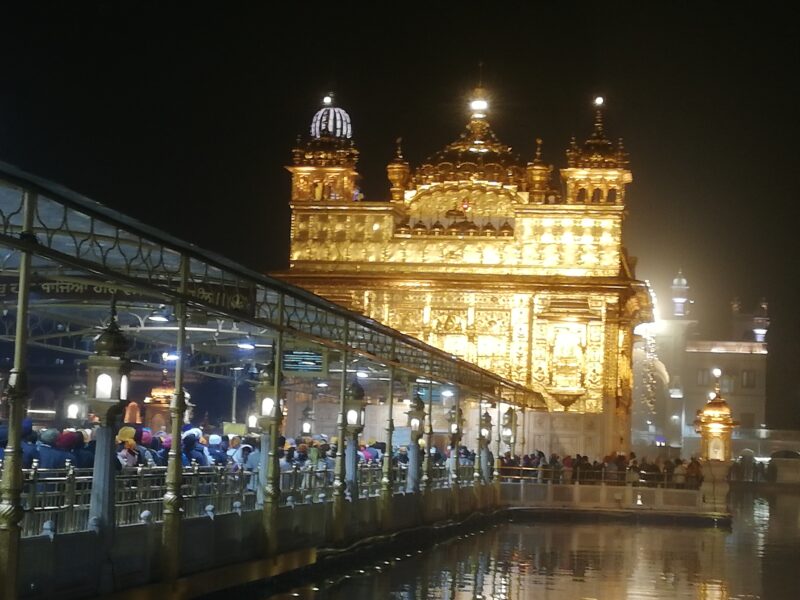
The temple was utterly glorious, like a giant golden nugget in the middle of a lake (the Amrit Sarovar, or “Pool of Nectar” after which Amritsar is named) which carried the temple’s reflection. If we were to see nothing else in India, the Golden Temple alone would be worth the hassle of getting here After drinking a free cup of water, we walked along the Parikrama, a rectangular marble pathway round the lake, and joined a long queue to enter the main shrine of the temple, the Hari Mandir (“Temple of God”) along a causeway across the lake. The atmosphere was electric with loud religious singing coming from loudspeakers with many of the people in the queue joining in. We stopped to watch a guru with a long white beard reading from a large book and many of the people were praying to him. We were then ushered up two flights of steps to walk round the top of the temple; Jennifer was limping badly with her leg and many people offered to help her down. Sikhs are famous for being aggressive and war-like (many of the people were carrying curved swords) but the only emotions we experienced at the temple were of peace and compassion. Everyone was so friendly towards us. On the way out we passed a tree shrine (the Dukh Banjani Bar) said to have miraculous healing powers) and the Achsath Tirath, said to represent 68 of the holiest Sikh shrines. The Parikrama continues to the Akhal Takht (the seat of the Sikh religious order), the construction of which was started in 1589, 12 years after Amritsar was founded, and completed in 1603.
We got a tuk-tuk back to the hotel for 100 rupees (about 90 pence) and I felt so sorry for the poor lad risking his life all day long for a pittance that I gave him 200 rupees. That included a tip of 100%, and I don’t intend to make a habit of it.