We were sad to leave Jaipur, although with a population of 4 million it’s a bit too big for me. The Old City is known as the “Pink City” because all the buildings are whitewashed (pinkwashed?) in a pink colour. The buildings were painted pink for a visit by Prince Albert (Queen Vic’s husband) in 1876. Our hotel was a haveli, a former home of some rich person built in a traditional Asian style with a central open courtyard surrounded by rooms. Many havelis have been converted into hotels with the courtyard used as a dining room. You can eat while gazing at the stars with a cold wind (its cold at night in winter) blowing up your trouser legs.
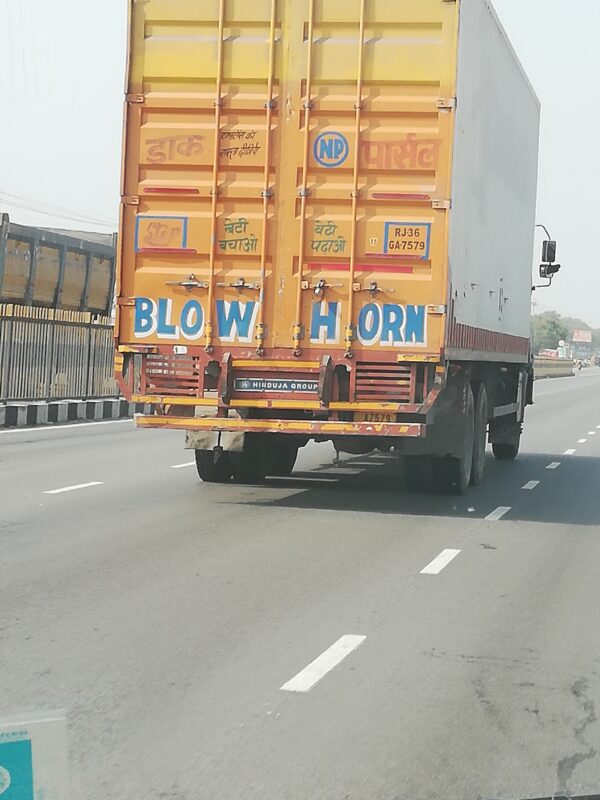
The trip to Pushkar was uneventful with many cars, lorries and scooters on the road. The lorries frequently have “Blow Horn” in big letters on the back; we told Mukesh that blowing your horn is usually considered rude in Britain unless in an emergency but it seems mandatory every ten seconds in India. When I hitch-hiked across India in 1971, nearly all the trucks were brightly painted with birds, flowers and slogans. One I remember said “Death is the wish of some the relief of many and the end of all”. There are very few painted trucks now.
Our hotel in Pushkar is a sweet little place called Kothi Pushkar. It has a restaurant with a rather limited menu. Pushkar is a holy city so the restaurant does not serve meat or eggs and the “butter” is probably margerine. However the food is nicely cooked and the breakfast consists of a banana pancake, a vegetable soup with a light chapati-type bread, toast and jam and coffee.
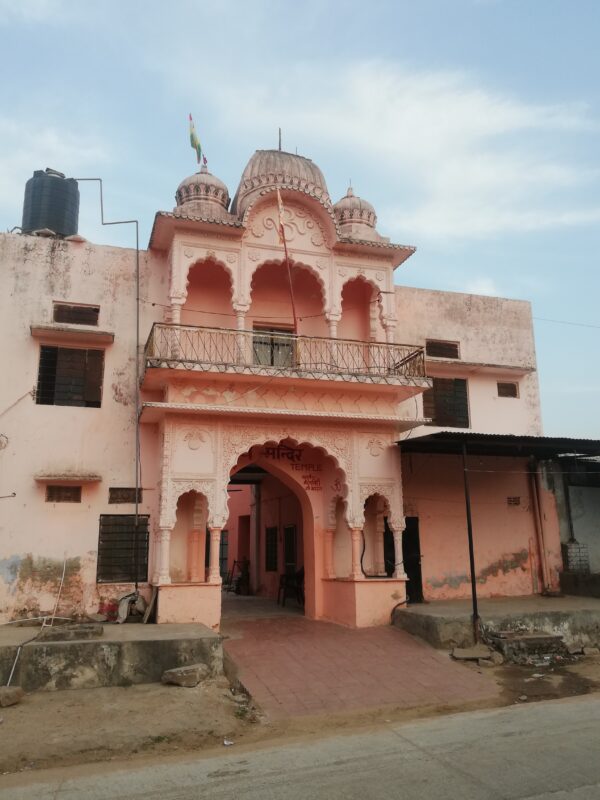
One of the 400 temples in Pushkar