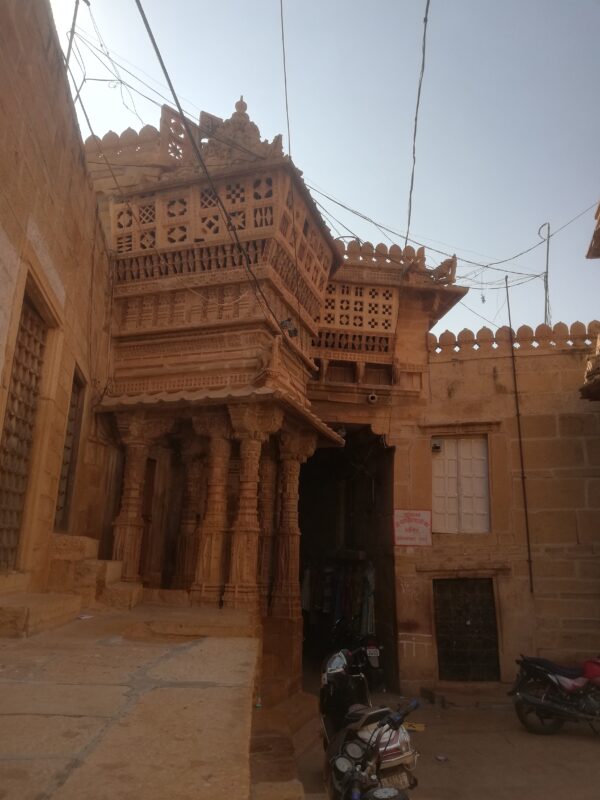
After a surprisingly nice breakfast we drove back to Jaisalmer where we discovered that the agency had forgotten to book us another night at the rather nice hotel we had stayed in on the 19th. It was full (it being the weekend) and virtually every other hotel contacted by Mr Mukesh was full. He eventually found us a grotty room in a grotty hotel, although the staff were pleasant and the bed was comfortable and clean. It was a beautiful old haveli in Jaisalmer’s typical golden sandstone which could have been a 5-star hotel with the expenditure of a bit of money. Like, for example, fixing the rusted taps which could not be used and ensuring that hot water was available for the shower. The breakfast, however, was not too bad although it took ages to get served.
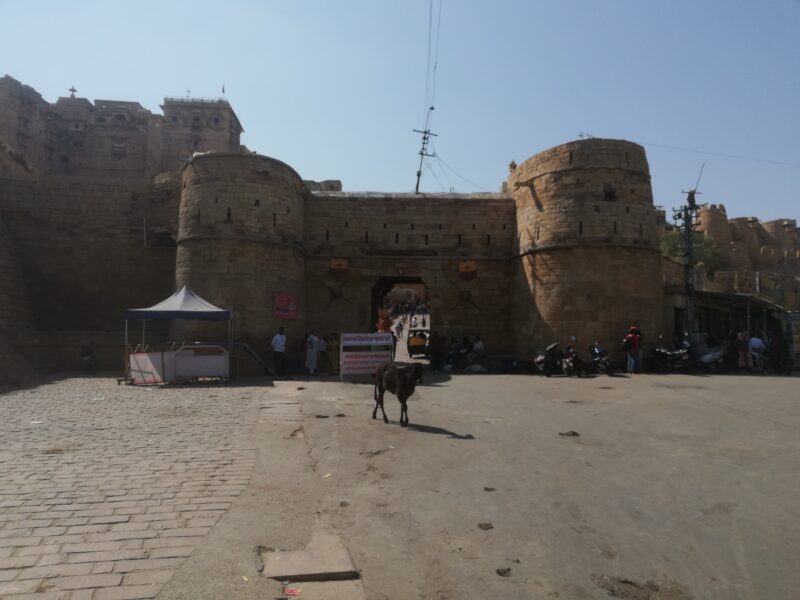
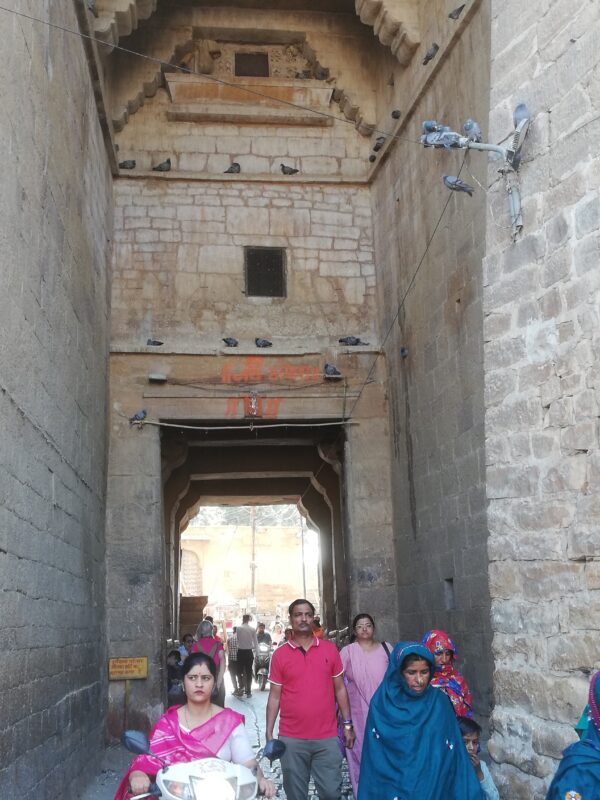
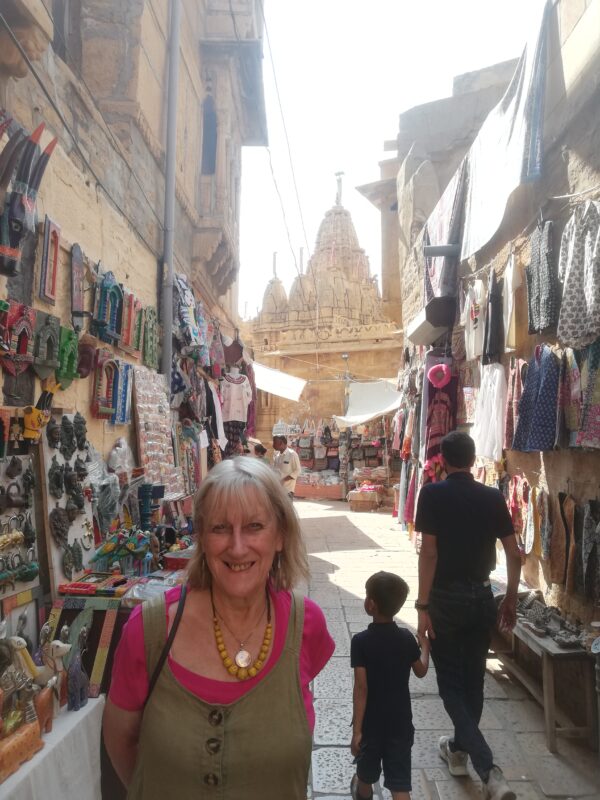
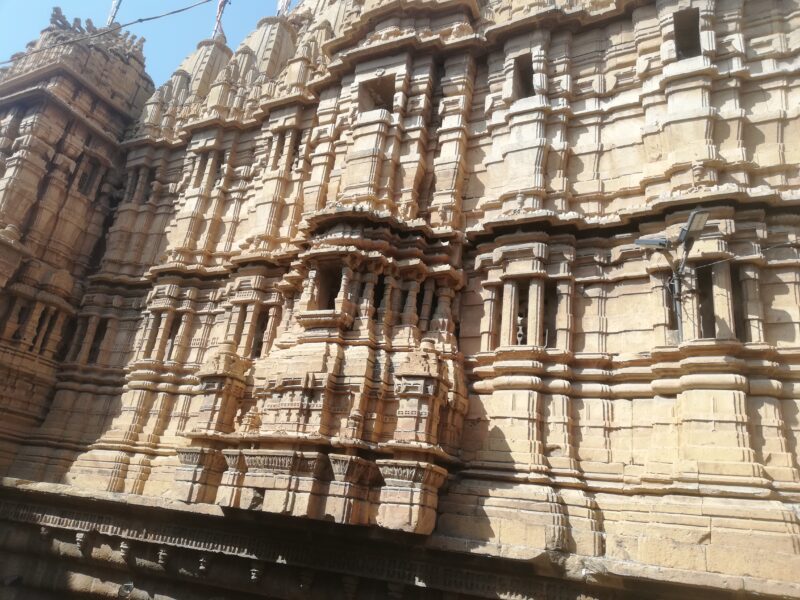
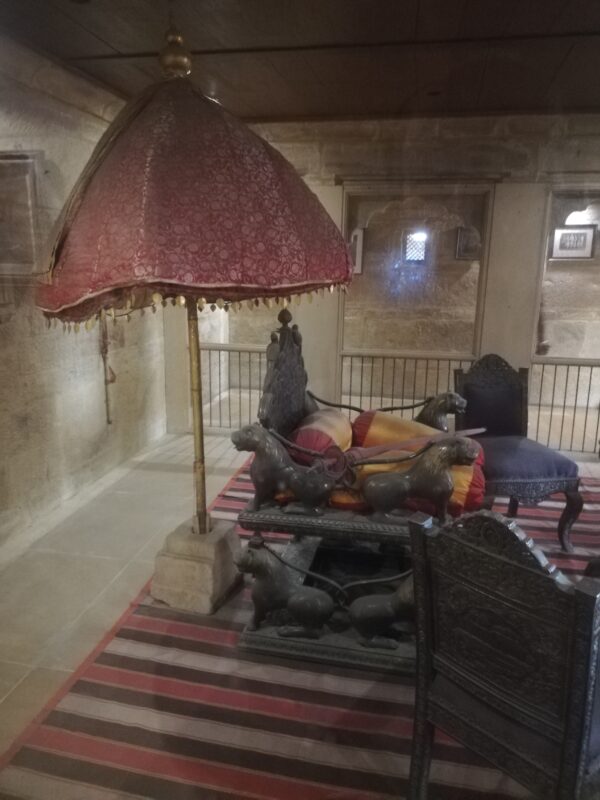
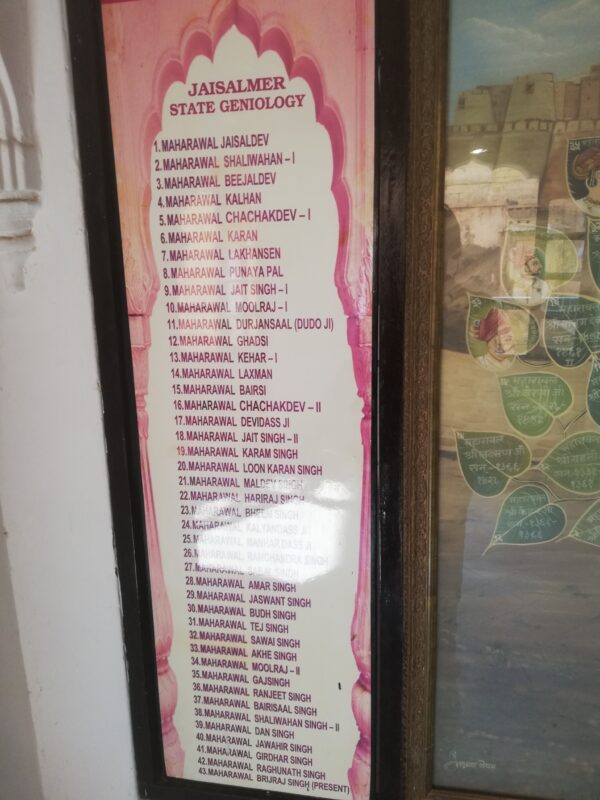
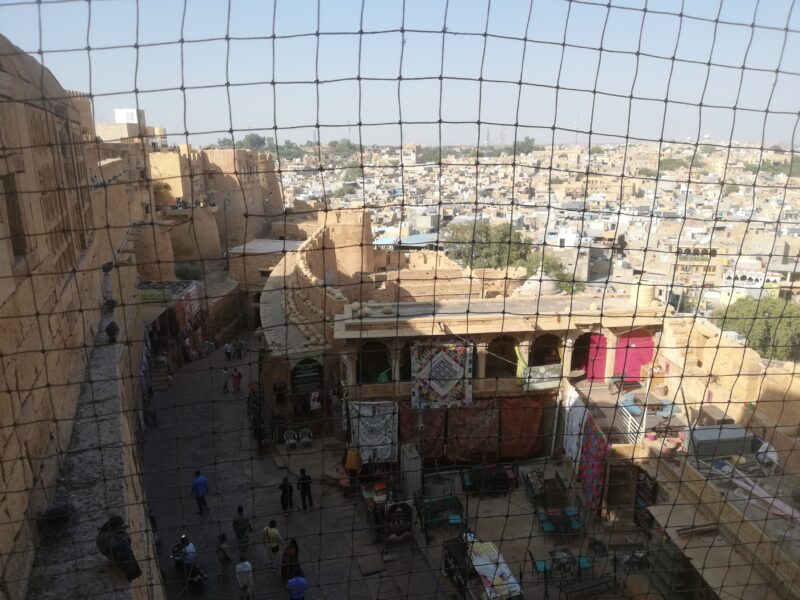
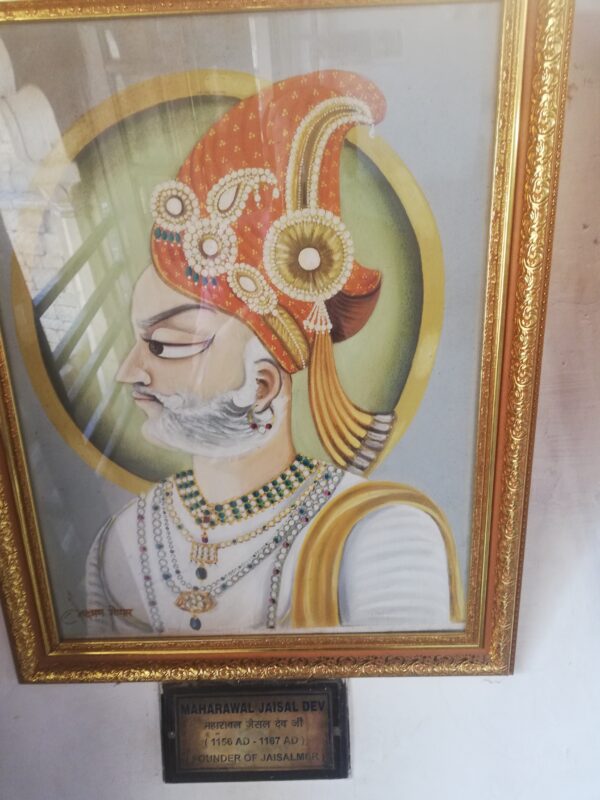
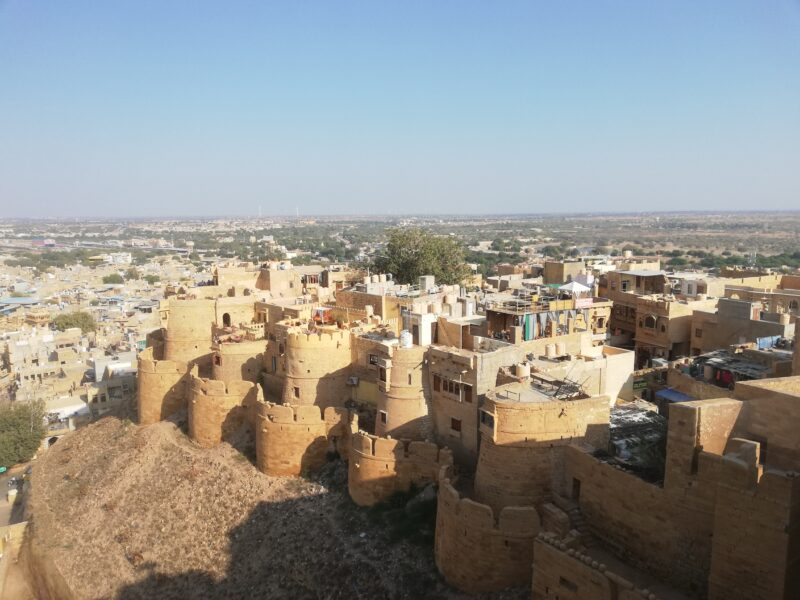
In the afternoon, we went to see the Jaisalmer Fort. Built in 1156 by Maharawal Jaisal (who gave his name to the town), it is known as the Golden Fort because it is built in golden sandstone. It is one of the very few “living forts” in the world because about 25% of the old city’s population live inside its walls. The narrow passageways are lined with endless stalls selling tourist tat. Several flights of steep stairs took us up to the top of a square tower which is the highest point of the fort. In 1299, the fort suffered a long siege by Alauddin Khalji of the Delhi Sultanate, provoked by a raid on his treasure caravan. Facing certain defeat, the Maharajah ordered the women to suffer jauhar while the men dressed in their orange death clothes and charged out to fight the Moslems in a saka (pronounced shaka), a suicidal battle fought on the Rajput principle of death before dishonour. There was another saka/jauhar a few years later and a third (known as the half-jauhar) in 1535 when the fort was attacked by the Mughals. They succeeded in breaking into the fort before the fire could be lit, so the women had their throats cut. Tragically, Rajput reinforcements arrived a short time later and the siege was lifted. The Mughal s attacked again in 1541 and the Rajput ruler bought them off by marrying his daughter to the Mughal emporer Akbar. The Mughals controlled the fort until 1762