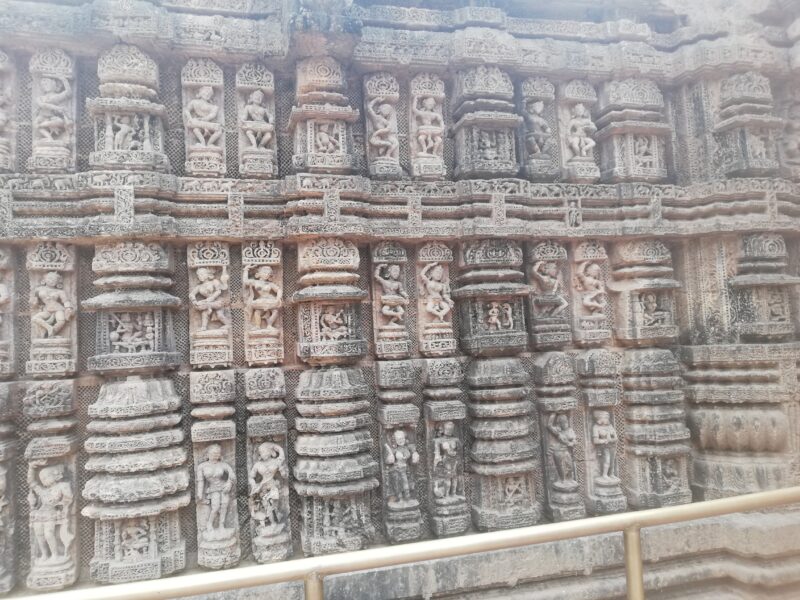
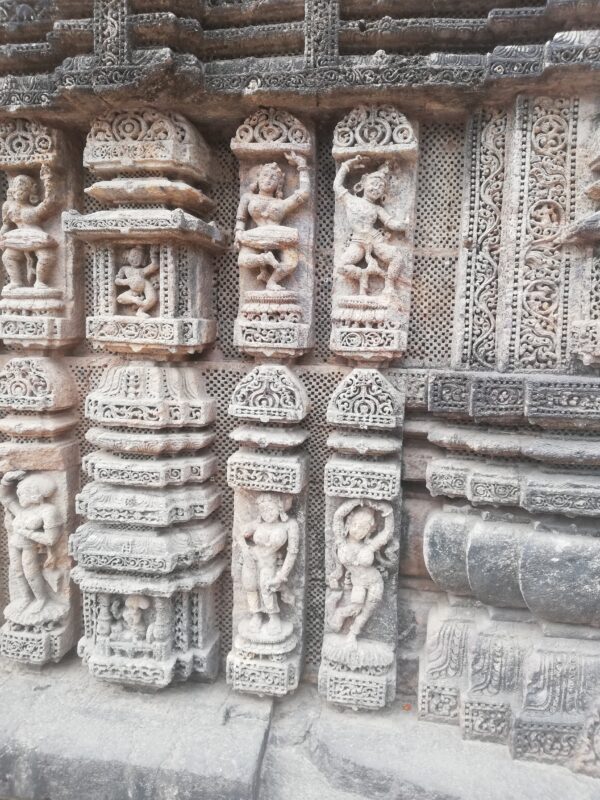
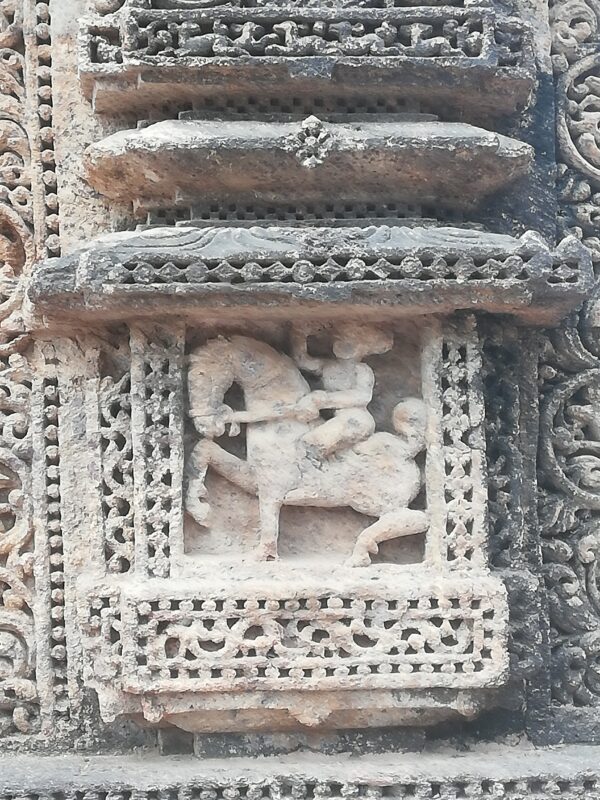
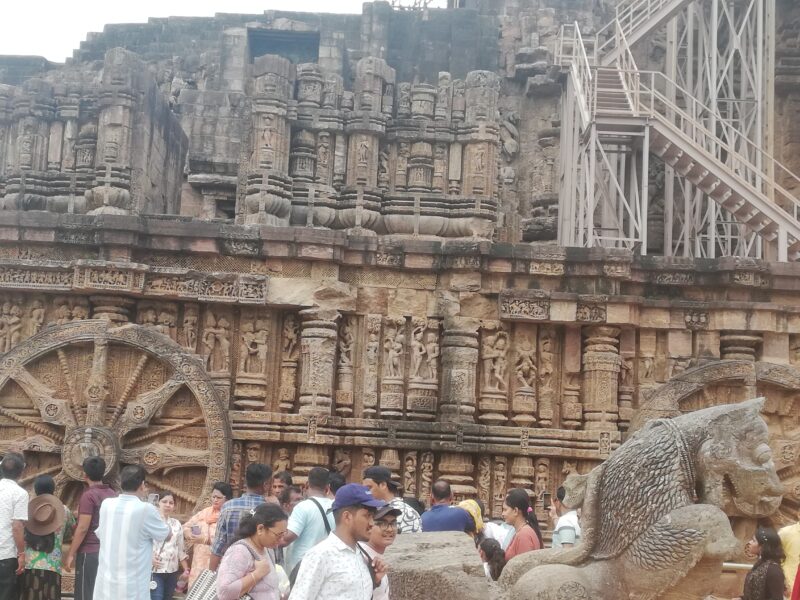
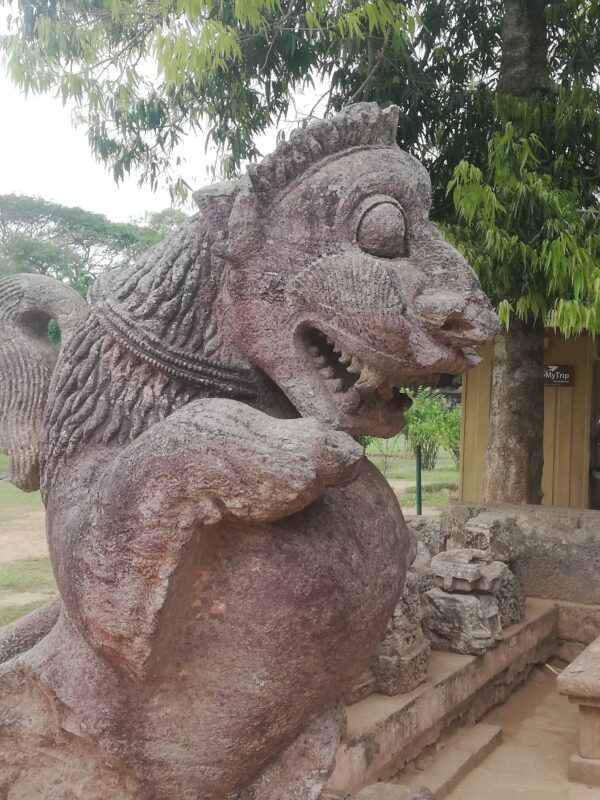
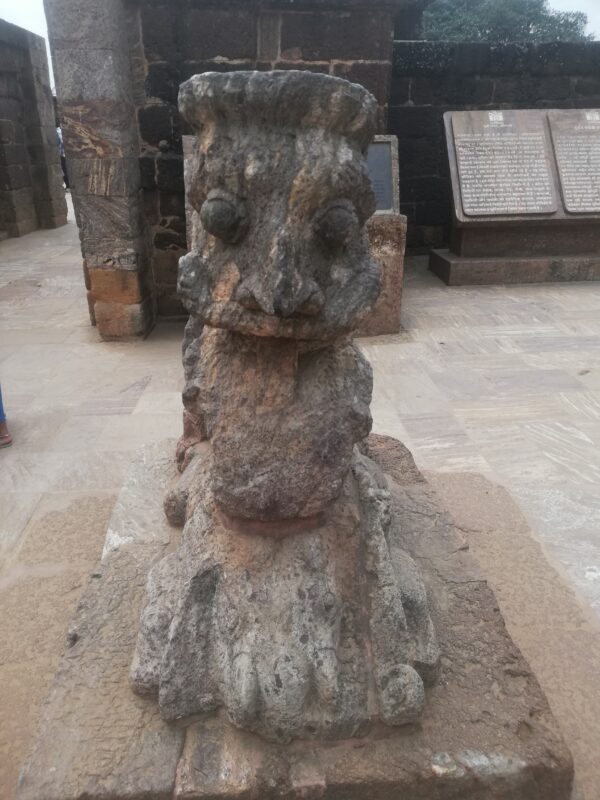
The brilliant La Franklin hotel arranged a taxi driver (the same grumpy one from yesterday) to take us to Konark to see the Sun Temple, and he was quite polite and friendly as well as a very good driver. He took us there over a distance of 44 miles and back while waiting for us to see the temple, all for £25. The temple was built by King Narasingha Deva 1 of the Eastern Ganga dynasty in 1250 for the worship of the Sun God Surya, the patron deity of the area. The design is of a huge chariot drawn by seven horses. The chariot has 12 beautifully carved wheels on each side and is covered in carvings of devine, semi-devine, human and animal forms as well as floral and geometric designs. The entrance has two gajasimha sculptures showing a lion (simha) crushing an elephant (gaja). It represents the triumph of spiritual wisdom over ego, wealth, and power, often placed at temple entrances to encourage leaving worldly desires behind. Our favourite carving was of two huge elephants, one of which was holding a child in its trunk. The temple is badly damaged and was originally much higher. There is debate about why it was damaged and theories vary between earthquakes and muslim armies. As early as 1676, European sailors could see it from dozens of miles out at sea and called it the Black Pagoda (because it is carved from black stone) while the Jaswanath temple at Puri was known as the White Pagoda. When viewed at sunrise from a certain inland location, the chariot can be seen to be transporting the sun. The Aruna Stambha pillar in front of the Jagwanath temple at Puri was removed there in Q4 of the 18th century. It is 33 feet high.
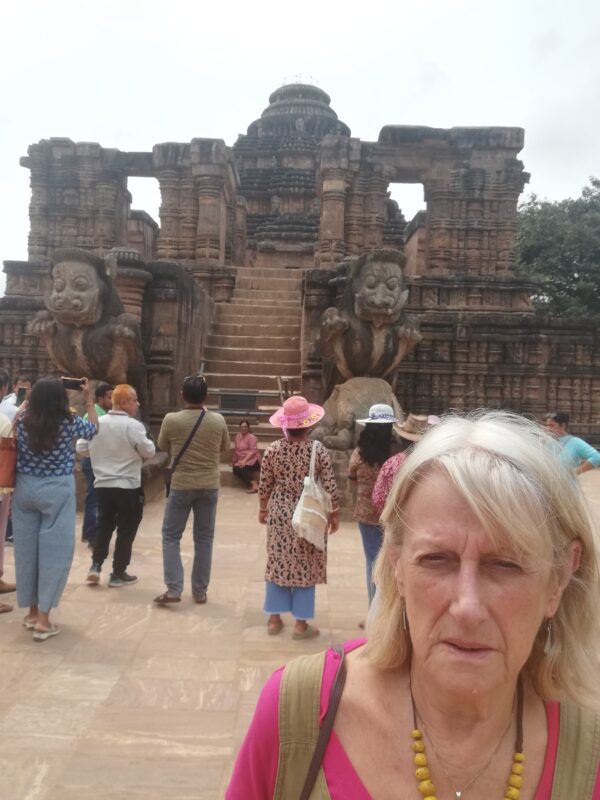
Jennifer feeling a bit ropey, standing before the gajasimhas