The guide, a young man (30 years old) called Son Lo, arrived at 7.30 and we set off to the first item of interest. The Muong Thanh Bridge is a wooden bridge across the river with the same name which flows through Dien Bien Phu and the Viet Minh raced across it on May 7th 1954 to attack the French HQ. They succeeded in disabling four machine gun installations and reached the bunker of the French commander de Castries who immediately surrendered together with his entire General Staff. The bunker was much bigger than I had gathered from the photos I had seen, with several rooms but rather spartan. The walls had detailed charts of the equipment available to each of the 8 camps which made up the fortress and the number of soldiers together with their ethnicity. I was surprised to see how many North Africans were fighting for the French, although they can’t have been too keen to do so because they were put in the most dangerous places and surrendered rather easily. On the way to the museum we stopped to examine the wreck of an American-made Chaffee M-24 tank which was blown up by artillery fire on May 7th. Ten of these tanks were donated by the Amercans and airlifted into the fortress, which was located in the most remote part of the country and inaccessible by road.
The museum was incredible. There is a 360-degree panorama of the battlefield and we felt like we were standing in the middle of it with the deafening sound of explosions and the whine of bullets. It is similar to the Panorama at Stalingrad but better because the details are much clearer. You can see the expressions on the faces of the tens of thousands of Viet Minh and French soldiers depicted on the wall. Some of the famous events are shown such as the Viet Minh who put his body under the wheel of an artillery gun to stop it from rolling down the hill it was being hauled up, the man (Phan Dinh Giot) who put his body in the window of a French machine-gun emplacement to prevent its use and the French nurse who, in the thick of hand-to-hand fighting, was treating both French and Vietnamese wounded. We then went to watch a short film consisting of newsreel footage interspersed with enactments of battle scenes. There is also a long section of the museum with artefacts from the battle such as a strengthened bicycle used by many thousands of local minority men to wheel two million tons of weapons, ammunition, food, fuel and medical supplies along tracks cut through the jungle from Hanoi. A rather poignant exhibit was a mandolin taken from a dead French soldier. A section was devoted to support given to the Viet Minh throughout the world, including a gun donated by the Chinese after they had captured it from the Japanese and a Russian gun.
We then went for a truly delicious meal at the Chung Thinh homestay which is run by a family of the Black Thai minority. There was a large fish caught in a nearby fish farm and baked with herbs and spices, a pie made of minced beef and various vegetables, a salad, a tofu in tomato sauce, white rice and purple sticky rice; the Black Thai roll it into a ball with a chunk of fish inside and eat it with their hands.
We then went on a 25-km drive up a winding road through glorious scenery of jungle, fish farms and paddy fields to the Viet Minh HQ from which General Vo Nguyen Giap directed the battle. It is located in the middle of a forest and the French never knew of its existence. We saw General Giap’s office made of bamboo and palm leaves and a tunnel cut through limestone to another hut where his deputy worked.
On 6th May, the Viet Minh attacked the final camp before the French HQ, Eliane (known as A1), with mass human waves and, despite massive casualties captured the camp. They were helped by sappers who had made a tunnel and packed it with 2 tons of explosives. Although they miscalculated and the enormous explosion happened about 100 metres away, the blast wrought huge damage on the French defenders and those left alive surrendered shortly afterwards. We saw the bunkers used by the French officers at A1, the trenches dug by the defenders and the massive crater created by the explosion.

Sign for Muong Thanh Bridge


Jennifer and Son Lo

Viet Minh crossing the bridge

Destroyed French machine gun

The bunker

De Castries surrendering

Inside the bunker

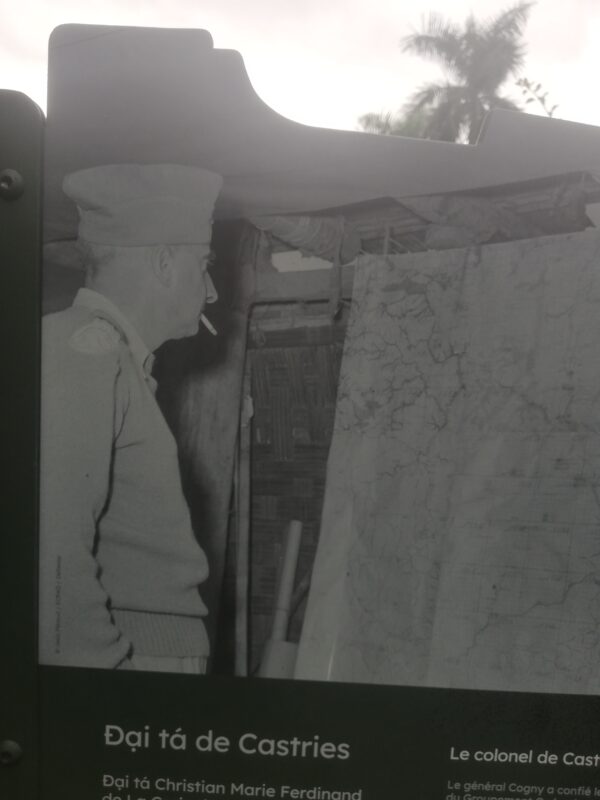
Final victory

A visitor

Destroyed tank outside the bunker
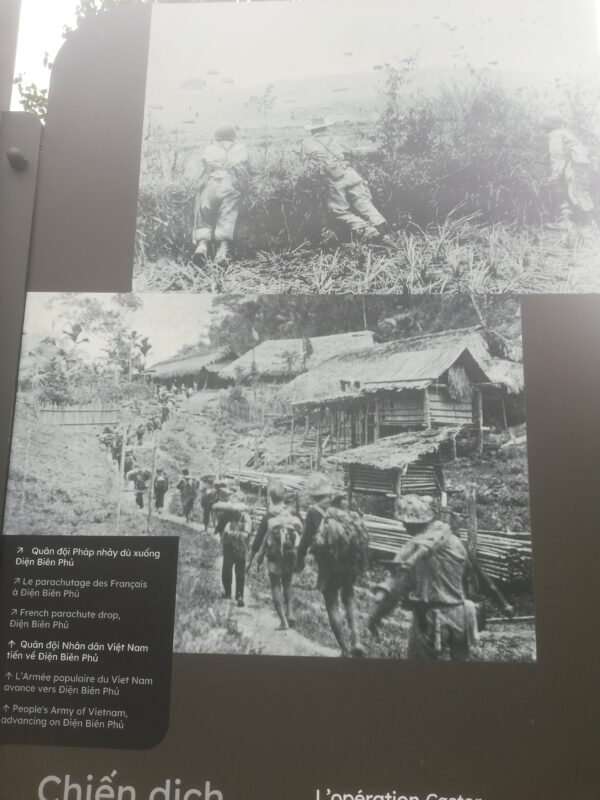


The museum
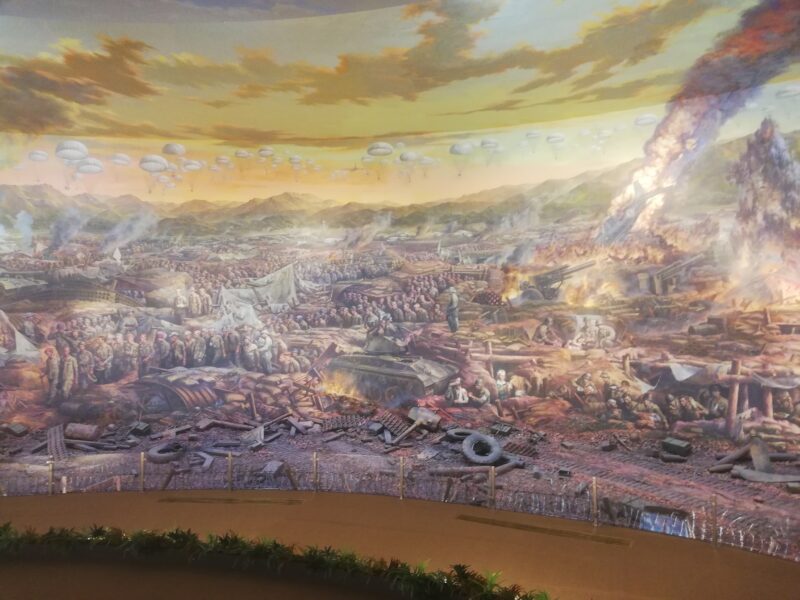


French surrender
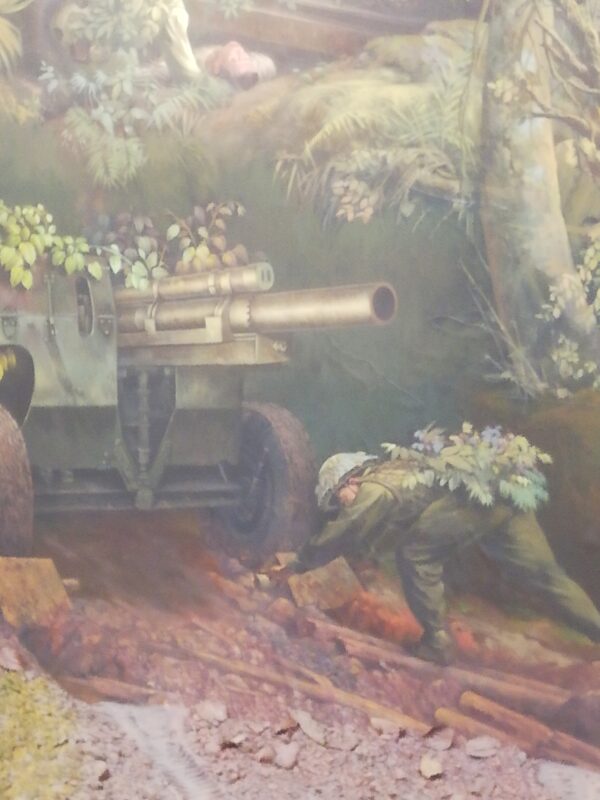
Gun being hauled up a hillside to a cave from which it could fire directly down on the French
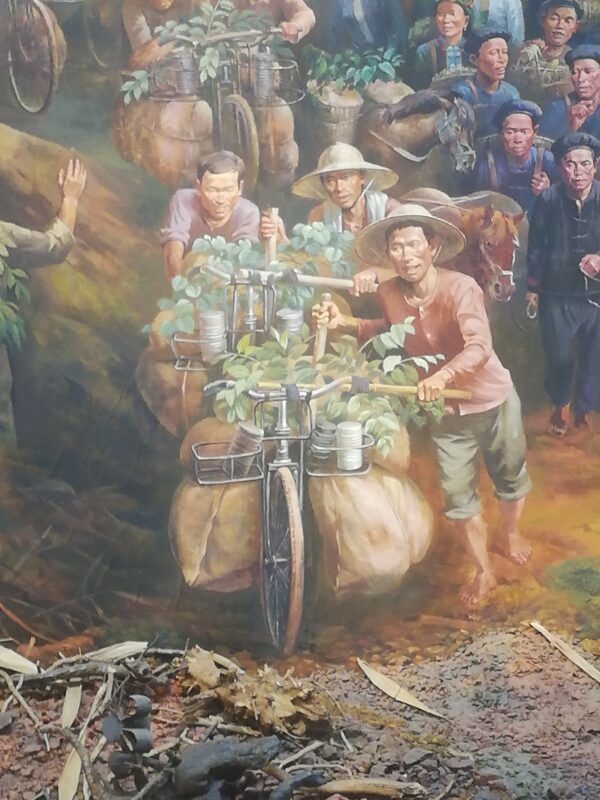
Strengthened bicycles used to carry material to the battlefield. The tracks were kept open by Black Thais (on the right)

Pigs marching to Dien Bien Phu to be eaten


Hand-to-hand fighting, Viet Minh on left, French on right


French surrender

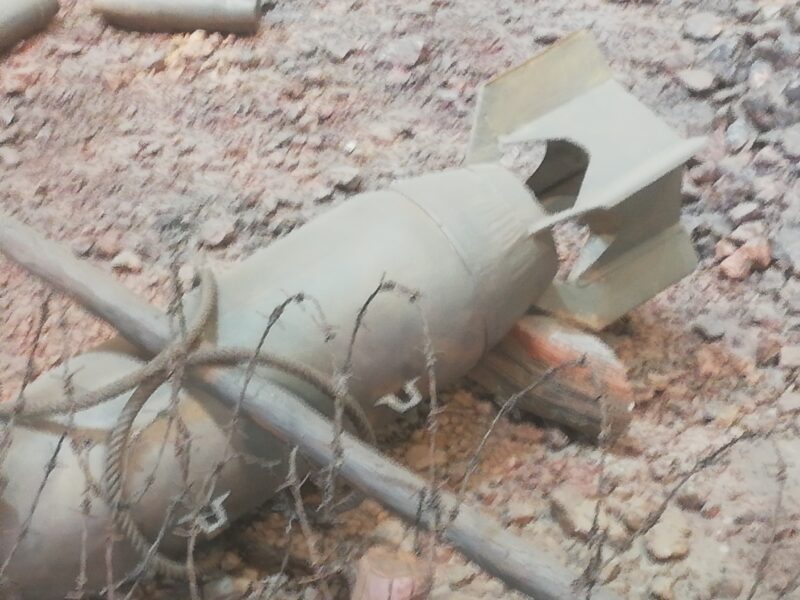

French cluster bomb


The village of Muong Thanh after liberation

Ho Chi Minh

Pham Van Dong, Ho Chi Minh and Vo Nguyen Giap

French prisoners being marched into captivity. They were released after three months

General Giap (third on left) planning his strategy in the secret jungle HQ


French flamethrower
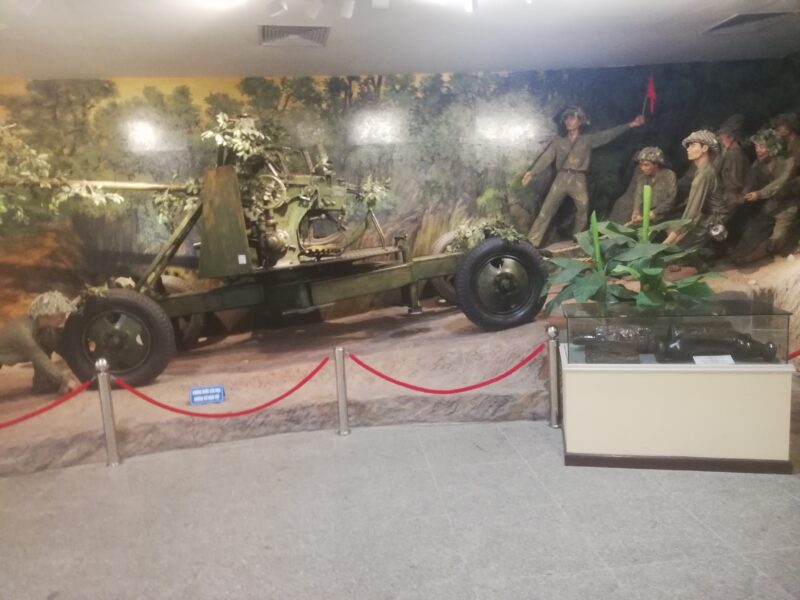
Hauling a gun up the mountainside

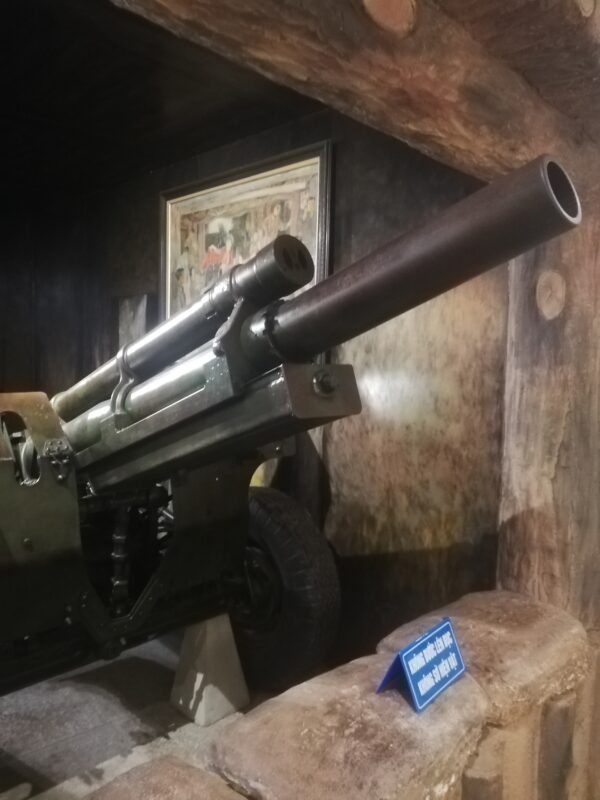
French 155-mm gun, the biggest in the battle


Russian gun

Soldiers relaxing in a trench

Katyusha rocket launcher


Bath of de Castries

View of the battlefield from the road to the secret Viet Minh HQ

Typical Black Thai house
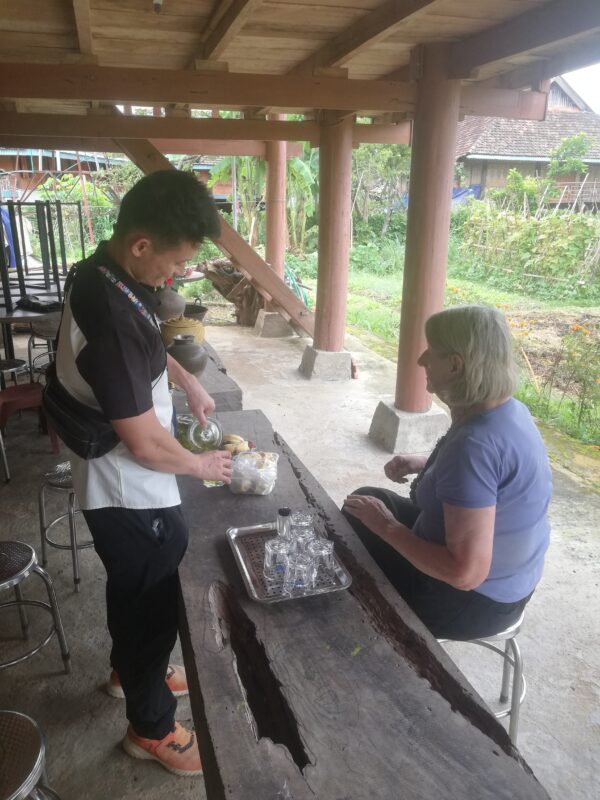
Tea time

Our lunch

The telegraphers room at Viet Minh HQ

A lychee tree


Meeting room

Living and working shack of General Giap

A special cooker where the smoke was diffused so that it couldn’t be seen during the day and the door could be closed so the flames couldn’t be seen at night. It was copied by the Viet Cong and the 1960’s

Letter from Ho Chi Minh at the Geneva Conference of 1954 establishing the right of Vietnam to self-determination.

Destroyed French tanks at camp A1


Camp A1. 2,800 Vietnamese died storming this hill
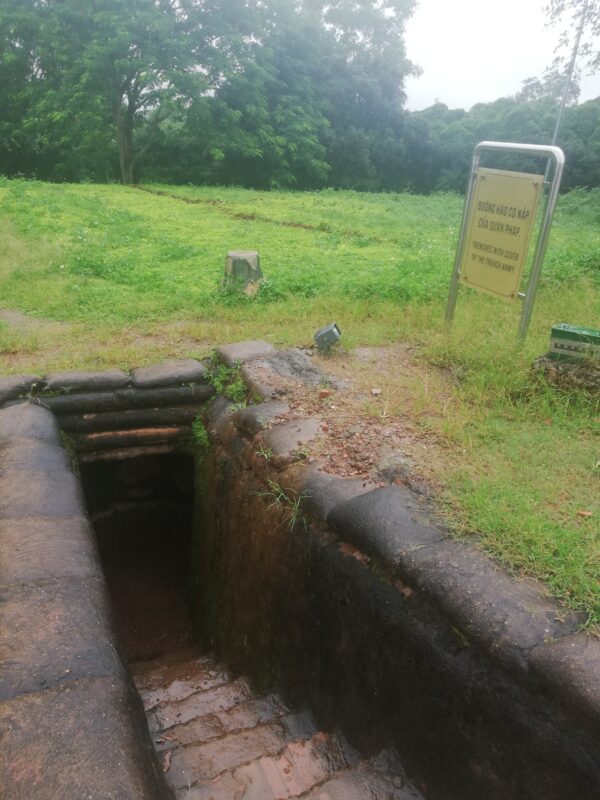
French bunker at A1

Crater created by explosion at A1

Victory monument at D2 (which I climbed up to yesterday)
